Water Around the Indoor Unit? The Clogged Condensate Drain
September 28, 2026
Quick Answer: Water collecting around your indoor air handler or furnace usually means the condensate drain line can no longer carry water where it needs to go. Algae, dust, and sludge build up inside that line over the cooling season, the water backs up into the drain pan, and it either overflows onto the floor or trips a safety switch that shuts the whole system down. Clearing the line and checking the pan, trap, and switch solves most cases. If the problem keeps coming back after cleaning, something else — a slope issue or a cracked pan — is usually behind it.
You notice it before you even think about it. A damp patch on the utility closet floor. A faint musty smell drifting out of the basement. Maybe a stain spreading across the drywall under the air handler that wasn't there last week. Your first move is probably a towel and a shrug — it dries up, you move on, you forget about it.
Then it happens again. Usually on the muggiest day of the week. And this time the AC has quit blowing cold air right along with the leak.
That combination shows up constantly during a Tri-State summer: standing water near the indoor unit, paired with a system that suddenly stops cooling. It looks alarming the first time you see it. It's rarely complicated once you know where the water is actually coming from — a small, easy-to-ignore part of your cooling system that happens to cause an outsized mess when nobody's checked on it in a while.
What the Condensate Drain Is Actually Doing
Every time your air conditioner or heat pump runs, it pulls humidity out of the air right along with the heat. That moisture collects on the evaporator coil, drips into a shallow pan underneath it, and flows out through a length of PVC pipe — the condensate drain line — to a spot outside, a floor drain, or a small pump that pushes it out. On a muggy July afternoon, that's not a trickle. A residential system working through a humid Ohio Valley day can pull several gallons of water out of the air before dinner, and every drop of it has to go somewhere.
As long as that path stays open, you never think about the drain. Water leaves the pan as fast as it arrives. The line stays clear. The only evidence it exists is a slow drip wherever the pipe ends outside. Trouble starts the moment something narrows that path — and a handful of things reliably do.
Why the Line Clogs in the First Place
The inside of a condensate line is dark, damp, and almost never disturbed — close to perfect conditions for algae and bacteria to move in. Over a season, a thin film builds along the interior wall of the pipe. It thickens. It catches more debris. Eventually it narrows the line enough to slow drainage to a crawl.
Dust and lint from the coil don't help. Even a clean-looking coil sheds fine particles into the water dripping off it, and that debris mixes into a soft sludge that settles at bends and low points — the same spots where algae tends to take hold first.
Then there's the pitch of the line itself. Condensate lines run on gravity, not pressure, so a line that's dead level, or one that dips and rises because of how it was routed through a wall or joist, gives water a place to sit instead of a path to follow. Standing water in a low spot is exactly where sludge and algae build fastest, which is why a slope problem often shows up first as an ordinary-looking clog rather than an obvious installation flaw.
A cracked or disconnected trap adds one more failure point. Many lines include a small trap, similar in concept to a sink trap, that keeps air from being pulled backward through the pipe. Crack it, separate it, or install it wrong from the start, and it can behave like a partial blockage on its own.
TIP: Catch a musty smell near the indoor unit before you ever see standing water? That's usually the algae film making its presence known. Dealing with it at that stage is a lot less disruptive than dealing with it after the pan has already overflowed.
Why Ohio Valley Humidity Puts This Line to Work Harder
Not every climate treats a condensate line the same way. In a dry climate, a residential AC might pull a gallon or two of moisture out of the air on a hot day, so the line handles a light, steady trickle without much strain. Around Evansville and the rest of the Tri-State, summer humidity keeps that coil working overtime — a system can move five to twenty gallons of condensate through that same narrow pipe on the worst days of July and August.
That volume cuts two ways. More water moving through the line means more chances for debris to settle and sludge to form. And when a clog does form, there's a lot more water backing up behind it, which is exactly why homeowners around here tend to discover the problem as an actual puddle rather than a slow drip that goes unnoticed for weeks. A line that might limp along for years in a drier region can back up in a single humid week here.
The Float Switch: The Part That Shuts You Down on Purpose
Most systems installed in the past couple of decades include a small safety device called a float switch, sitting either in the primary drain pan or inline on the drain itself. Its job is simple. Watch the water level. If it climbs higher than it should, cut power to the system before that water reaches the ceiling, the floor, or the walls below.
That's a deliberate safeguard, not a malfunction. When your AC shuts off out of nowhere on a hot afternoon and the drain pan underneath is full, the float switch did exactly what it was built to do — it traded a day of lost cooling for a much bigger cleanup. What makes it frustrating is that the switch itself can get physically stuck by the same algae and sludge clogging the line, so it may keep tripping even after the water level starts to drop, or fail to reset cleanly once the line is cleared.
WARNING: Never disconnect or bypass a float switch just to get the system running again. It's the one thing standing between a clogged drain and real water damage to flooring, drywall, or a finished ceiling below the unit. If the system keeps shutting off, the fix is clearing the actual blockage — not removing the part warning you about it.
Early Signs Worth Paying Attention To
A clog rarely announces itself all at once. Before a puddle shows up, there are usually smaller signals: a musty smell near the air handler right after a cooling cycle finishes, a drip outside that's slower than usual (or missing entirely on a day the system has clearly been running), a gurgling sound in the drain line that often means air is trapped where water should be flowing freely, or indoor humidity that feels higher than it should given how hard the system is working.
Any one of those on its own is worth a look. All of them together point to a line that's narrowing and heading toward a full stop.
What Happens If the Clog Goes Unaddressed
The immediate risk is water damage — stained ceilings, warped flooring, ruined drywall, or a soaked finished-basement ceiling if the air handler sits above living space. That's the visible cost. It's not the only one.
A drain pan sitting full of standing water in a warm, humid closet or basement in August is also a place mold and mildew can settle in, and once that starts, it can affect the air moving through the whole house, not just the space around the unit. On top of that, a system that keeps shutting off and restarting as the float switch trips and resets puts extra wear on the compressor with every cycle — hard on a part you'd rather not replace early.
What a Thorough Visit Actually Covers
Clearing a clogged condensate line properly means more than flushing the obvious blockage. It means checking the drain pan for cracks or corrosion, confirming the line pitches correctly along its full run, verifying the trap is intact and installed the right way, and testing the float switch to make sure it both trips and resets like it should. Flush the line without addressing a slope problem or a cracked pan, and you've bought yourself a few weeks before it backs up again.
Between visits, a simple habit helps. Check the drain pan and the spot where the line exits the house every few weeks during the cooling season, and pay attention to whether that outside drip is steady or has slowed down. Catching a slowdown early is the difference between a quick flush and a soaked ceiling.
Keeping It From Becoming a Repeat Problem
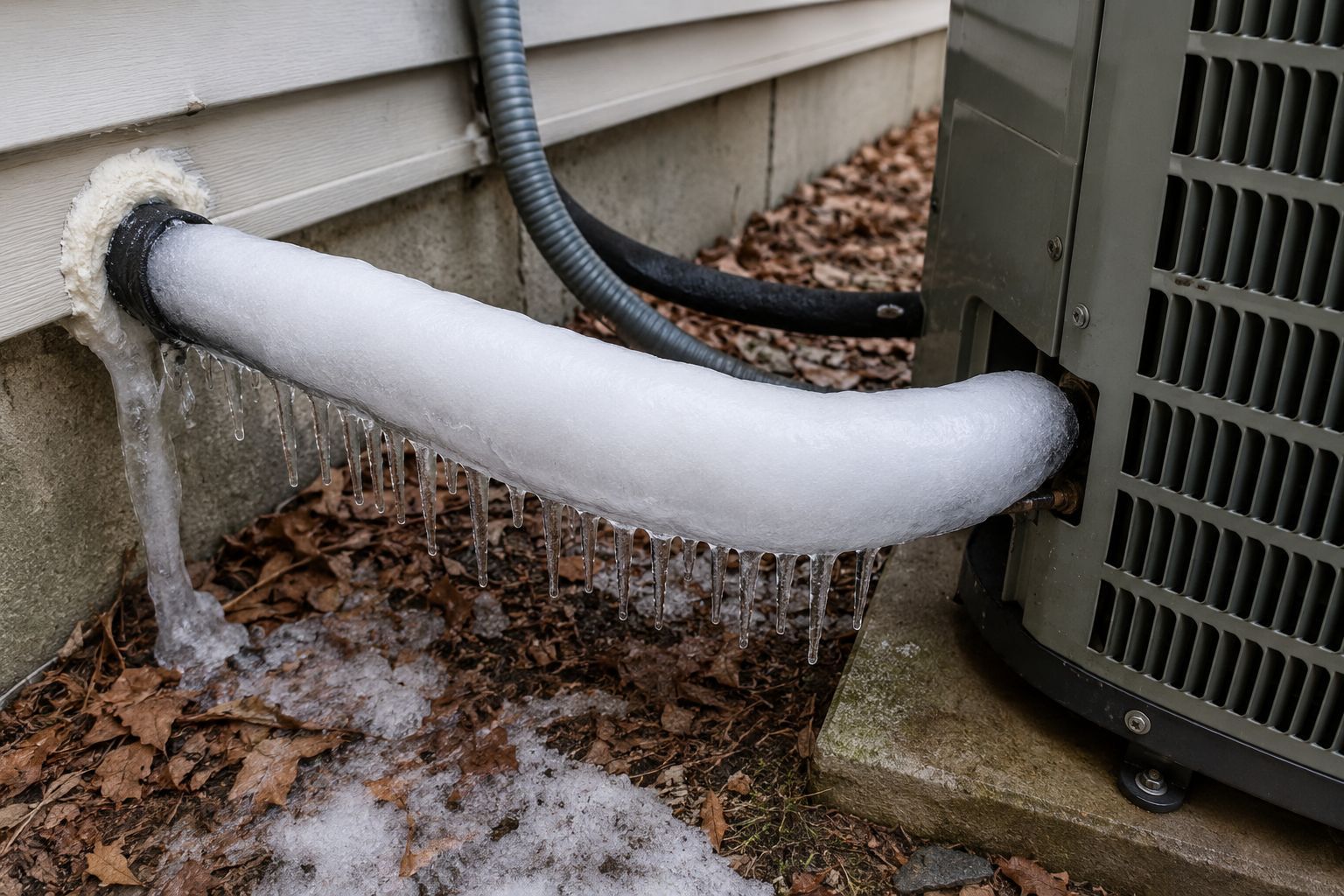
Once a line has been cleared and confirmed to be pitched and connected the way it should be, staying ahead of it comes down to routine attention rather than anything complicated. A clean air filter matters here too. A dirty filter restricts airflow across the coil, which can cause the coil to ice over — and the sudden melt when the system shuts off floods a drain pan far faster than it was ever built to handle. Folding the drain line and pan into a seasonal maintenance visit, instead of waiting for the next puddle to show up, keeps things running the way they should through the humid months..
Frequently Asked Questions
Is a clogged condensate drain an emergency?
Not a life safety emergency, but it deserves quick attention. Standing water near an indoor unit can damage flooring, drywall, and ceilings fast, and a tripped float switch means no cooling until the line clears.
Why does my AC only leak water during humid weather?
Condensate volume tracks directly with how much moisture the system pulls from the air. On a muggy day the coil handles far more water, so a partially narrowed line can suddenly back up and overflow.
Can I clear a condensate drain clog myself?
Some homeowners flush the line with a wet or dry vacuum at the outside end, clearing a light clog well enough. It won't fix a sloped line, cracked pan, or a stuck float switch, though.
Why does my system keep shutting off even after the drain looks clear?
The float switch may be stuck from algae or sludge residue, or it could be malfunctioning on its own. Water could also be backing up somewhere in the line that isn't visible from either end.
Does a clogged drain mean I need a new drain pan?
Usually not. Most clogs clear up once the line is flushed and the pan and trap are confirmed intact. A new pan is only needed if the existing one is cracked, corroded, or badly sloped.
How often should the condensate drain get checked?
Folding it into a seasonal cooling tune-up before the humid months ramp up catches most developing clogs early. Homes with heavy tree cover or a history of drain trouble benefit from a mid-season check too.
Can a clogged drain line affect indoor air quality?
Yes. Standing water sitting in a warm drain pan or line is a place mold and mildew can take hold, affecting the air moving through the whole system, not just the space around the unit.
What's the difference between a drain issue and a refrigerant issue if my AC stops cooling?
A drain-related shutdown almost always comes with visible water or a damp pan, and the system restarts fine once the line clears. A refrigerant issue tends to show weak cooling or ice on the lines.
A Small Drain Line, A Bigger Story
A condensate drain rarely fails without warning. A musty smell, a slower drip outside, or a faint gurgle in the line usually shows up before water reaches the floor. Humid climates put that small pipe through more work than most, which is why it deserves attention on a regular schedule rather than only after something goes wrong. Catching those early signs keeps a minor clog from turning into a soaked ceiling or a system shut down on the hottest day of the year.
A & A Precision Heating, Cooling & Refrigeration
has spent more than 30
years working through this exact problem for homeowners across Evansville, IN, treating the drain line, pan, trap, and float switch as one connected system rather than a quick patch. That kind of attention keeps a cooling system reliable through a long, humid season instead of leaving homeowners guessing every time a puddle appears near the indoor unit. A little routine care up front is usually enough to keep it working quietly, exactly as it should.