Common Commercial HVAC Problems and How to Spot Them Early
June 30, 2026
You walk the floor on a humid Monday morning and something feels off. The front of the building is comfortable, but the back offices are warm and sticky, and the rooftop unit that usually hums quietly is now kicking on and off every few minutes. Maybe a faint musty smell hangs near a supply vent, or a water stain creeps across a clean ceiling tile. Nothing has shut down yet, so the call slides to next week. That is the exact moment a small problem becomes a big one.
Here is the most important thing to understand up front: almost every major commercial HVAC failure announces itself weeks before it happens. Longer run times, uneven temperatures, odd noises, and moisture where it does not belong are early symptoms of a specific mechanical fault, each pointing to a different root cause. After tracing enough of these failures to their source, we can tell you that spotting them early is the difference between a repair and a full replacement.
The Early Warning Signs That Something Is Failing
The clearest early sign of trouble is your system running noticeably longer to hold its setpoint. When a unit works that hard, it is fighting a restriction somewhere: a clogging filter, a fouled coil, or a refrigerant charge that has started to drop.
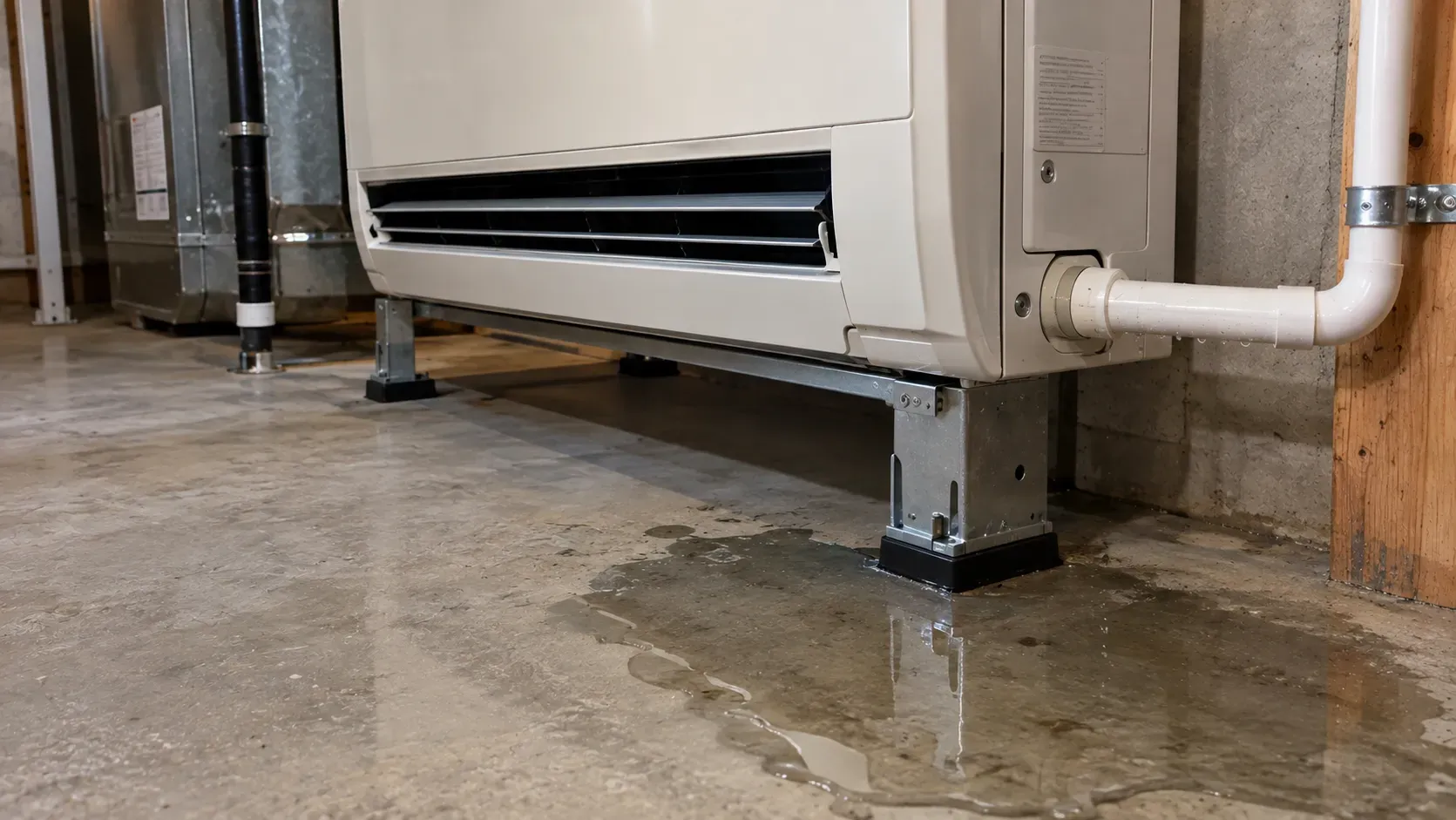
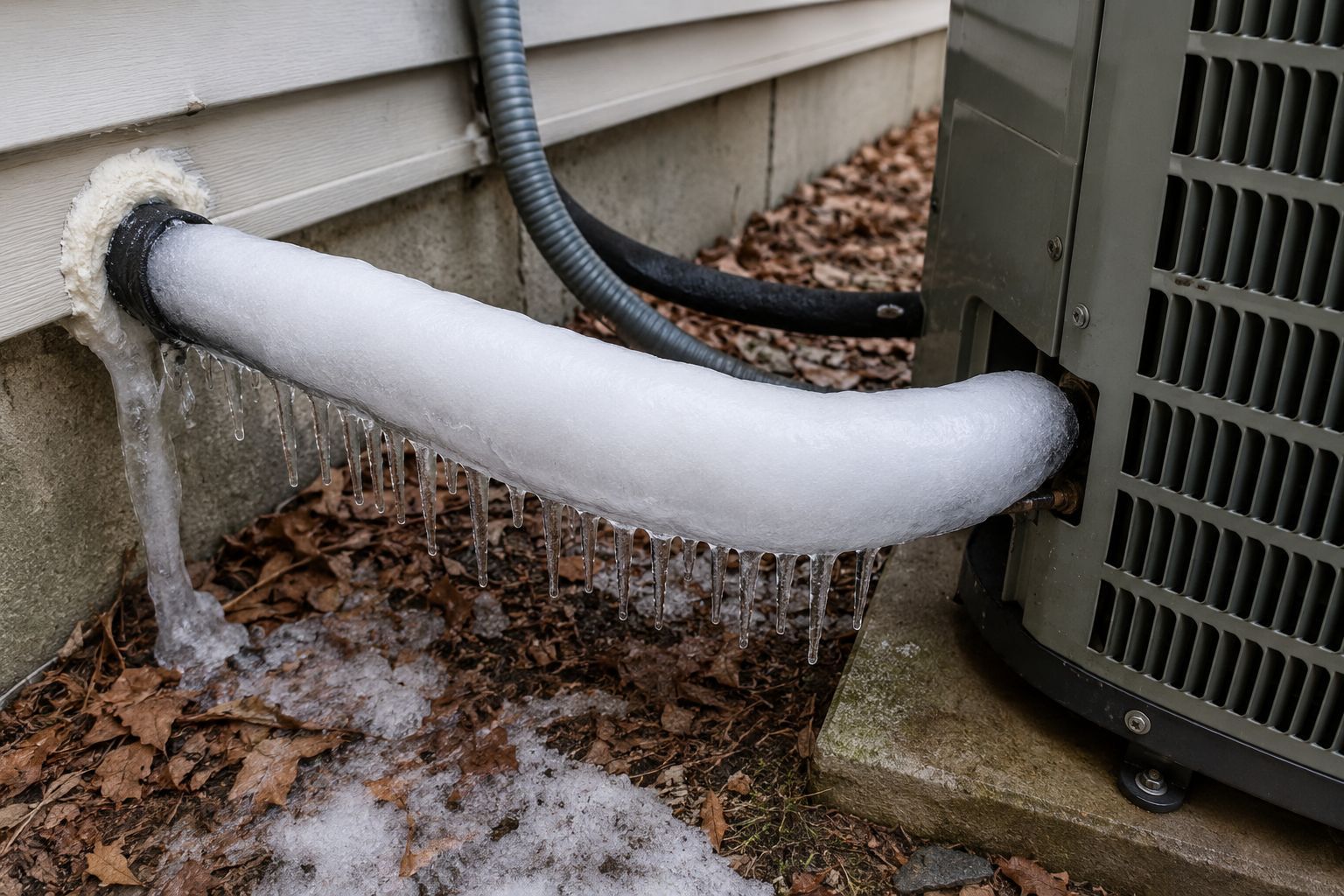
Other signals show up before a breakdown. Watch for uneven temperatures from one zone to the next, weak airflow at the registers, and short cycling where the unit starts and stops every few minutes. Sounds matter too: a squeal means a worn belt or bearing, a grind points to a failing motor, and hard clicking at startup signals a bad contactor. Musty smells, water pooling at the base, and frost on the lines all point to a system in distress.
What Is Actually Going Wrong Inside Your System
Restricted airflow is the single most common problem we find, and it traces back to something simple. Filters in a busy commercial space load up fast and need changing every 30 to 90 days. Once a filter clogs, airflow across the evaporator coil drops, the coil gets too cold, and condensation freezes into ice that chokes cooling. Dirty coils do the same.
Low refrigerant. A healthy system pulls a temperature split of roughly 18 to 22 degrees between return and supply air. When that split shrinks, refrigerant is often low, and low charge almost always means a leak rather than refrigerant that simply ran out. Running low forces the compressor to overheat, which is how a slow leak becomes a failed compressor.
Electrical wear. Capacitors and contactors take a beating from constant cycling and weaken after 5 to 10 years. A swollen capacitor or pitted contactor causes hard starts, hums, and intermittent shutdowns long before it fails.
Compressor and motor strain. The compressor commonly lasts 12 to 15 years, but neglected airflow and refrigerant problems shorten that life sharply. Worn blower belts and dry bearings fail quietly until a grinding noise gives them away.
Condensate and drainage. Every cooling system pulls moisture from the air, and that water has to drain. A clogged condensate line backs water into the unit, staining ceilings, feeding mold, and tripping the safety switch that shuts the system off.
How We Diagnose Commercial HVAC Problems in the Field
We work the problem in a fixed order so nothing gets missed: airflow first, then refrigerant, then electrical, then controls. On service calls we frequently find a frozen coil an owner assumed was a dead compressor, when the real culprit was a neglected filter.
Our tools do the talking. Manifold gauges read refrigerant pressures, a clamp meter checks amp draw against the motor rating, a thermometer confirms the temperature split, and a static pressure probe shows how hard the blower is fighting. An infrared meter spots overheating connections, and a leak detector finds the pinhole bleeding refrigerant. These numbers tell us whether a unit needs a part, a cleaning, or honest talk about replacement.
TIP: Before calling anyone, check your filters and the outdoor coil. A filter you cannot see light through, or a coil packed with cottonwood and pollen, explains many weak cooling complaints, and clearing it often restores performance fast.
WARNING: If a unit keeps tripping its breaker, do not keep resetting it. A breaker that trips repeatedly is protecting you from an electrical fault that can overheat wiring and start a fire. Leave it off and have us inspect the unit.
Catching Problems Before They Spread
A short maintenance rhythm prevents most of these failures. Each month, change filters and walk the building to confirm every zone is holding temperature. Each quarter, inspect belts for cracking and glazing, listen for new bearing noise, and clear the condensate drain for the cooling season.
Once a year, we run a full service: coil cleaning, refrigerant check, electrical tightening, and an amp draw test. The item we never skip here is a deep condenser coil cleaning in late spring. Cottonwood, pollen, and field dust blanket rooftop coils all summer, and a clogged condenser coil is a leading reason a system loses capacity when the heat peaks.
Why Buildings In Our Region Fail Differently
Our river valley climate puts commercial systems under a heavier moisture load than most of the country sees. Long, sticky summers force units to pull huge amounts of water from the air, flooding condensate drains and pushing coils toward freezing far more often than a drier climate would. That makes drain maintenance and airflow checks more urgent here than average.
The seasonal swing adds strain. Hard summer heat gives way to sharp winter cold snaps, and that freeze and thaw cycle works connections loose and stresses startup parts. Spring storms bring power surges that punish capacitors and control boards. Together, that humidity, dust, and electrical instability make small problems escalate fast here.
Common Mistakes We See Building Owners Make
The most frequent mistake is ignoring a new noise because the system still cools. A squeal or rattle is a part telling you it is wearing out, and running it to failure usually takes neighboring parts down with it. Log the sound and have it checked at the next visit.
Another is cranking the thermostat far below normal to force faster cooling. The system cannot move air any faster than its blower allows, so that only runs a struggling unit harder and freezes the coil sooner. A steady, reasonable setpoint actually cools the space faster.
Finally, many owners stretch the gap between filter changes to save effort, then face a frozen coil and a no cooling call in July. A filter is the simplest safeguard there is, and changing it on schedule prevents that whole chain of failures.
Frequently Asked Questions
How early can commercial HVAC problems be spotted?
Most failures show warning signs two to six weeks before breakdown. Longer runtimes, uneven temperatures, weak airflow, and unusual noises appear first, often while the system still cools well enough to seem fine. Schedule an inspection the moment runtime climbs or sounds change, and you usually catch the underlying issue while it is still a minor repair rather than replacement.
Is it safe to keep running a commercial unit that is short cycling?
We recommend shutting it down. Short cycling overheats the compressor and can trip breakers, which usually signals an electrical fault or a refrigerant problem that may worsen quickly. Running it anyway risks compressor damage and, in rare cases, wiring overheating that creates a fire hazard. Turn the unit off and call us to find the cause before it runs again.
Why do humid summers cause more HVAC problems here?
Humid air forces your system to remove far more moisture, which strains the evaporator coil and floods condensate drains throughout the warm months. When those drains clog, water backs up and can freeze the coil or stain ceilings below it. Because our river valley summers stay heavy with moisture, we clear and treat drain lines every spring before peak humidity.
How often should commercial HVAC filters be changed?
In most commercial buildings, filters need changing every 30 to 90 days, depending on occupancy, dust load, and how many hours the system runs. High traffic spaces and dusty environments push toward the shorter end of that range. A clogged filter restricts airflow, freezes coils, and overworks the blower, so we check and replace filters at every routine service visit.
What is the most common commercial HVAC problem?
Restricted airflow is the most common issue we find, usually from dirty filters or clogged coils that choke off airflow entirely. It mimics bigger failures by causing weak cooling, frozen coils, and longer runtimes that look like compressor trouble. Because prevention is simple, regular filter changes and coil cleaning stop most of these calls before they even start to happen.
Trusted Commercial HVAC Experts Who Catch Problems Early
The core principle is simple:
commercial HVAC
failures almost always warn you first, and the owners who act on longer runtimes, odd noises, and stray moisture are the ones who avoid emergency replacements. In our humid river valley, where condensate problems and rooftop dust hit harder than almost anywhere else, that early action matters even more. With 30
years of experience, A & A Precision Heating, Cooling & Refrigeration
is ready to inspect and fix issues across Evansville, Indiana, before a small fault shuts your building down.