Furnace Blowing but the Air Isn't Hot? Where the Heat Is Going
October 31, 2026
Quick Answer: WWhen a furnace blows air that isn't hot, the blower is working but the heat is being lost, shut off, or never made. The usual causes are a thermostat fan set to On, a clogged filter that overheats the unit and trips the high limit safety switch, a dirty flame sensor or burners that keep the flame from staying lit, a clogged condensate drain on a high efficiency furnace, a failing ignitor, and leaky ducts that dump warm air into the attic or crawl space before it reaches a register. Start with the thermostat and the filter, since both take a few minutes. If the air is still lukewarm after that, the cause is almost always a safety lockout or a part that needs a technician.
You walk to the vent on a cold January morning, hold your hand over it, and feel air moving. Plenty of it. It just isn't warm. The furnace is humming, the blower is pushing, and the house is still sitting at 61 degrees while the thermostat says it should be 70. That mismatch is more common than most people expect, and it confuses a lot of homeowners because the furnace sounds like it is doing its job.
Here is the thing to hold onto: moving air and making heat are two separate jobs inside a furnace. The blower handles the first one. The burners, the heat exchanger, and a chain of safety sensors handle the second. When one link in that second chain breaks or trips, the blower often keeps right on running. You get a steady breeze of room temperature air, and the house slowly gets colder.
This article walks through where the heat actually goes missing, in the order a technician would look for it, so you can tell what you can safely check yourself and what needs a professional.
Start With the Thermostat Before Anything Else
It feels silly to check the thermostat first, but it explains a surprising number of cold vent complaints. We have walked into homes in Evansville and Newburgh where the cause was a setting somebody bumped during a cleaning weekend.
Fan Set To On Instead Of Auto
With the fan set to On, the blower runs continuously, even when burners are off. Set it to Auto so airflow stops between heating cycles.
Wrong Mode Or A Low Setpoint
A thermostat left on Cool or set below room temperature will not call for heat. Check the mode and raise the temperature setting.
Dead Batteries
Weak thermostat batteries can leave the display working while furnace signals become unreliable. Replace the batteries first before investigating other possible heating problems.
If the thermostat checks out and the furnace is calling for heat, move on to the next step.
A Clogged Filter Can Shut the Heat Off on Purpose
The filter is the most common reason a furnace stops making heat while the blower keeps going. It sounds too simple to be the cause, but the chain of events is real.
A filter packed with dust and pet hair chokes the airflow across the heat exchanger. The metal heats up faster than the air can carry the warmth away. A safety device called the high limit switch senses the rising temperature and cuts off the burners to protect the furnace. The blower stays on to cool things down. When the heat exchanger drops back into a safe range, the burners try again, overheat again, and shut off again.
You feel this as air that is warm for a few minutes, then lukewarm, then cool, then warm again. Manufacturers such as Trane also point out that repeated overheating from a dirty filter can wear out the limit switch itself, and then the furnace blows cool air for good until a technician replaces the switch.
What to do. Turn the furnace off at the thermostat, pull the filter, and hold it up to a light. If you can't see through it, replace it. Most filters need changing every 30 to 90 days depending on the filter type, whether you have pets, and how dusty the house runs. During a heating season when the system runs for hours on end, check it monthly.
TIP: Write the install date on the edge of the filter with a marker. When you pull it out next time, you will know right away whether it has been sitting for six weeks or six months.
When the Flame Never Lights or Won't Stay Lit
If the filter is clean and the thermostat is right, the next suspect is the burner system. A gas furnace has to light the burners, prove that the flame is there, and keep it going. Each of those steps has a part that can fail while the blower stays perfectly healthy.
A Dirty Flame Sensor
Residue can coat the flame sensor, preventing it from confirming ignition. The control board then shuts off gas, causing repeated short attempts to light properly.
Dirty Burners
Dust and grime can block burner ports, disrupting gas flow and preventing proper combustion. The blower still runs, sending cool air through household registers instead.
A Failing Ignitor
A failing ignitor may crack or weaken, preventing gas from lighting. Older furnaces with standing pilots can also stop heating when the pilot goes out.
An Empty Fuel Supply
Low propane or a closed gas valve can prevent ignition. Check the fuel supply and valve position before assuming another furnace component has failed elsewhere.
WARNING: If you smell gas, leave the house and call your gas utility from outside. Do not flip switches, light anything, or try to troubleshoot. Gas odor is never a do it yourself situation.
A Clogged Condensate Drain on a High Efficiency Furnace
This one catches people off guard because they associate condensate drains with air conditioners. A high efficiency furnace, often called a condensing furnace, pulls so much heat out of the exhaust that the exhaust cools and turns into water. That water has to drain away through a small line, a trap, and sometimes a pump.
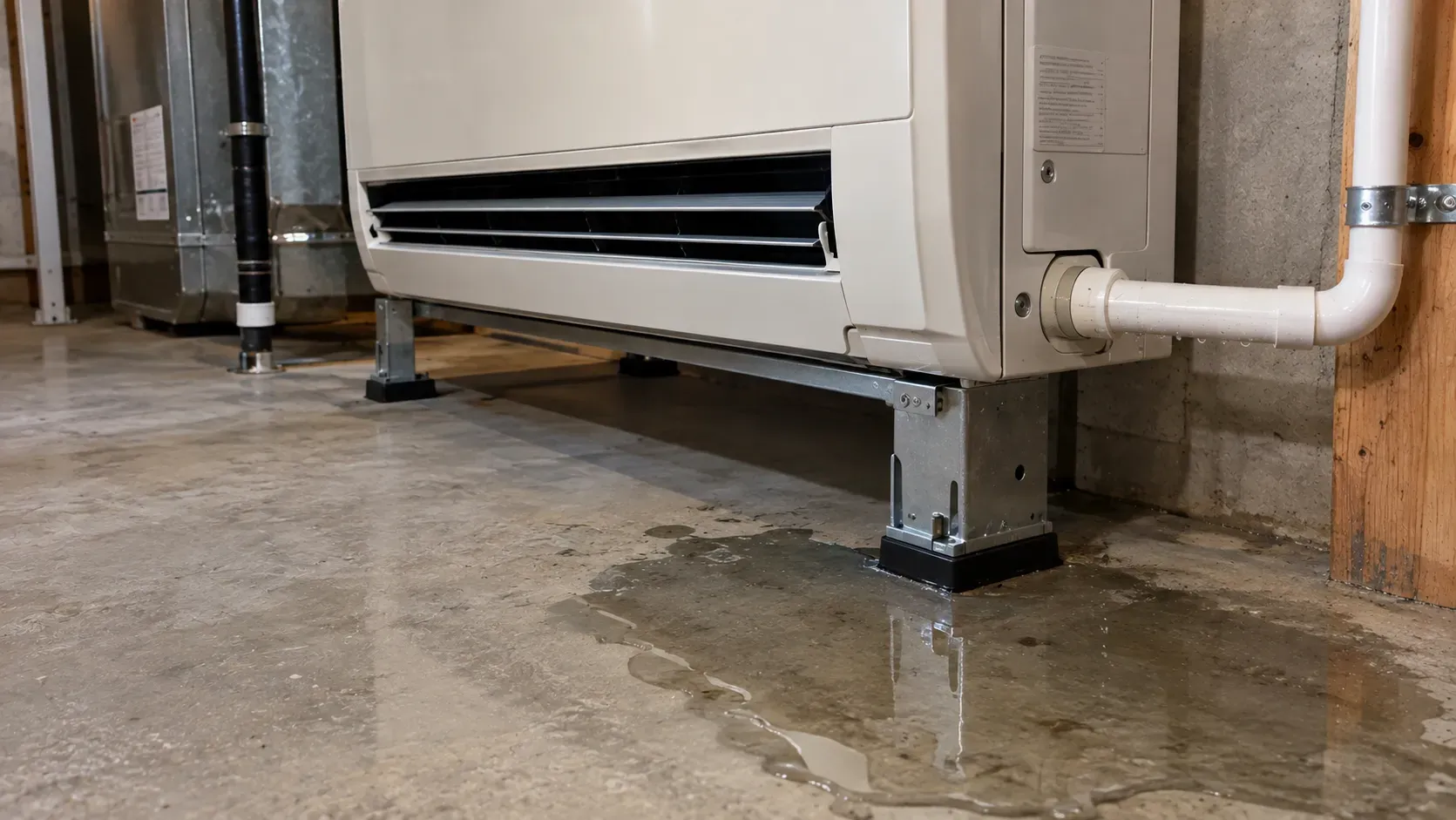
When that drain clogs with sludge, cobwebs, or debris, the water backs up and trips a safety switch. The burners will not light, and the blower keeps pushing cool air. If your furnace has white PVC pipes running out the side or through the wall, and you notice water around the base, a drain problem moves to the top of the list.
Why Ohio Valley Homes See It
Furnaces in this part of Indiana and Kentucky tend to sit in unfinished basements and utility rooms that get damp in spring and fall. That moisture, plus summer dust, gives the drain line plenty to clog with by the time the first cold snap arrives. If you read our earlier piece on a clogged condensate drain on the cooling side, the same slime and debris problem applies here.
A technician clears the line, cleans the trap, checks the pump if there is one, and confirms that the safety switch is reading correctly. It is a quick fix when it is caught early and a mess when it is ignored.
Leaky Ducts Can Steal the Heat After the Furnace Makes It
Sometimes the furnace is doing everything right. The burners light, the heat exchanger gets hot, and the blower pushes warm air into the ducts. Then the heat disappears before it reaches you.
Duct losses are bigger than most people assume. University of Florida extension researchers note that typical duct systems lose 25 to 40 percent of the heating or cooling energy the equipment produces. A leaky joint in an attic, a disconnected run in a crawl space, or a gap at the plenum does not just waste heat. It also pulls cold air into the system and mixes it with the warm air on its way to the rooms.
How It Feels
One or two rooms may stay chilly while others remain comfortable. Registers far from the furnace may blow weak or tepid air, while long cycles never reach the thermostat setting.
Why It Ties To Air Quality
Leaky return ducts can pull dust, insulation fibers, and crawl space air into the system. Persistent dust or stale odors when heating starts may indicate ductwork problems affecting indoor air quality.
A Blower or Airflow Problem That Looks Like a Heat Problem
Not every cold vent complaint is about the burners. Sometimes the heat is there and the airflow is wrong, which makes the air feel lukewarm even though the furnace is working.
A Dirty Blower Wheel
Dust buildup on blower blades reduces airflow, raising furnace temperatures and potentially causing the limit switch to trip.
Closed Or Blocked Registers
Closing vents or covering floor registers restricts airflow, increasing duct pressure and reducing the amount of heated air circulating.
A Failing Blower Motor
A weak or incorrectly operating motor can produce poor airflow. Humming, squealing, or rattling may indicate developing motor problems.
What You Can Safely Check, and What to Leave Alone
There is a sensible line between a quick homeowner check and a job that needs a licensed technician with the right tools.
Safe To Try
Check that the thermostat is set to Heat and the fan is on Auto. Replace weak batteries, inspect the filter, open all registers, confirm the furnace switch is on, and check breakers.
Leave To A Technician
Leave gas valves, burners, flame sensors, ignitors, control boards, limit switches, draft inducers, and heat exchangers to technicians. These components involve gas, fire, high voltage, or carbon monoxide risks requiring proper handling.
TIP: When you call for service, tell the technician what you noticed and when. Mention whether the air starts warm and fades, whether you hear clicking or a failed start, and whether the filter was dirty. Those details often point straight to the cause and save time on the visit.
What a Proper Furnace Visit Looks Like
A good service call goes past swapping one part and walking away. A technician working through a lukewarm furnace complaint should check the thermostat call for heat, the filter condition, and the ignition sequence from start to finish. That means watching the draft inducer start, the ignitor glow, the gas valve open, the burners light, and the flame sensor hold the signal.
From there, the technician looks at the limit switch and the temperature rise across the furnace, which tells you whether the airflow is in the range the manufacturer intends. The condensate drain gets checked on a condensing unit. The blower wheel and motor get a look. If the furnace is doing its part and the house is still cold, the next step is the ductwork.
The goal is to find out why the heat went missing, not just to get the burners lit again for a week. A furnace that is fixed without the cause being found tends to come back with the same complaint a few cold nights later.
Frequently Asked Questions
Why is my furnace blowing cold air when the heat is on?
The blower is running, but the burners are not firing or are being shut off. Common causes are a fan set to On, a dirty filter, a dirty flame sensor, or a failed ignitor.
Is it normal for the air to feel lukewarm at the registers?
Air from a working gas furnace should feel clearly warm within a minute or two. Lukewarm air that never improves points to a heat problem or duct loss. Fading warmth suggests the limit switch is cycling.
Can a dirty filter really make my furnace stop heating?
Yes. A clogged filter restricts airflow, the heat exchanger overheats, and the high limit switch shuts off the burners. The blower keeps running, so you get air without heat. Replacing the filter often solves it.
Why does my furnace start warm and then blow cool air?
That pattern usually means the furnace lights, then shuts down. A flame sensor that cannot hold the signal or a limit switch tripping from poor airflow are the usual causes. Each cycle then repeats itself.
Should I keep running the furnace if it is blowing cool air?
It is best not to keep resetting it. A furnace that keeps locking out is signaling a problem, and repeated cycling can stress parts. Turn it off, check the simple items, and call for service.
Could leaky ducts be the reason my house stays cold?
They can be. Duct leaks let heated air escape into attics and crawl spaces and pull in cold air, so far rooms get weak, cool airflow. A duct inspection finds the leaks, and sealing helps.
Getting Steady Warmth Back Into Every Room
A furnace that blows air without heat is rarely a mystery once someone traces the path from the thermostat to the register. The cause is a safety device doing its job, a part that has worn out, or warm air escaping through leaky ducts before it reaches the rooms. Most homeowners can handle the first two checks, the thermostat and the filter, in a few minutes. Everything beyond that involves gas, flame, and high voltage, so those repairs belong with a technician.
Homeowners across Evansville, IN, can lean on A & A Precision Heating, Cooling & Refrigeration, a team with 30+ years of HVAC and refrigeration experience, when the problem goes past a simple filter swap. The crew is licensed, insured, and bonded, and its work carries a warranty of up to 30
years on parts, equipment, and labor. A furnace repaired with its true cause found keeps the house comfortable through the coldest weeks of the year.